2026 SECURE 2.0 Catch-Up Contribution Mandates: Over $145K Earners
Anúncios
SECURE 2.0 catch-up contributions changed significantly in 2026 for certain older workers participating in employer-sponsored retirement plans. The new rules particularly affect how some higher earners make their additional contributions.
For 2026, the Roth catch-up wage threshold is based on prior-year FICA wages exceeding $150,000 from the employer sponsoring the plan. This replaces the original statutory $145,000 figure after the required inflation adjustment.
Workers age 50 or older should understand how the Roth requirement, contribution limits, employer systems, and age-specific rules interact before making retirement planning decisions.
Understanding the 2026 SECURE 2.0 Catch-Up Contribution Mandates
SECURE 2.0 catch-up contributions allow eligible older workers to contribute additional amounts after reaching the standard annual elective deferral limit.
A major 2026 change affects certain participants whose prior-year FICA wages from the employer sponsoring the plan exceeded the applicable Roth catch-up threshold.
Anúncios
For those participants, catch-up amounts subject to the rule must generally be treated as designated Roth contributions rather than traditional pre-tax catch-up contributions.
The Genesis of SECURE 2.0
The SECURE 2.0 Act built on earlier federal retirement legislation by expanding savings opportunities and modifying numerous employer-plan rules.
Among its provisions were a higher catch-up limit for certain participants ages 60 through 63 and the Roth catch-up requirement for specified higher-wage employees.
Anúncios
These changes make SECURE 2.0 catch-up planning more important for workers approaching retirement and for employers administering eligible plans.
Key Changes for High-Income Earners
Beginning in 2026, the Roth catch-up requirement applies to certain eligible participants whose FICA wages from the plan-sponsoring employer exceeded $150,000 during 2025.
The rule can apply to eligible catch-up contributions under plans such as 401(k), 403(b), and eligible governmental 457(b) arrangements covered by the statute.
The important distinction is that the rule applies to catch-up contributions, not automatically to every regular contribution the affected worker makes during the year.
Impact on Retirement Strategies
Mandatory Roth treatment changes the timing of taxation. Roth contributions are generally made after tax rather than reducing taxable income in the year contributed.
Affected catch-up amounts generally must be designated Roth contributions.
Qualified Roth distributions can generally be tax-free when applicable requirements are satisfied.
The change may alter the balance between pre-tax and Roth assets in a retirement portfolio.
Workers affected by the rule may therefore need to revisit withholding, cash flow, and their broader mix of retirement accounts.
Understanding SECURE 2.0 catch-up contributions can help participants evaluate the rule within their overall retirement and tax strategy rather than viewing it in isolation.
Navigating the $150,000 Income Threshold
The 2026 threshold is **$150,000**, not $145,000. It is determined using applicable FICA wages received in the preceding calendar year from the employer sponsoring the retirement plan.
This means the wages used to determine whether the Roth requirement applies in 2026 are generally the relevant wages paid by that employer during 2025.
The threshold is indexed for cost-of-living changes, so participants should check the applicable figure each year rather than assuming $150,000 will remain unchanged indefinitely.

Employer Responsibilities and Challenges
Employers and plan administrators need systems capable of identifying participants subject to the Roth catch-up rule based on applicable prior-year wages.
Payroll and retirement-plan systems may also need to distinguish ordinary elective deferrals from catch-up amounts and route required catch-up contributions correctly.
Clear employee communication is important because SECURE 2.0 catch-up contributions can affect tax treatment even when the worker's overall savings goal has not changed.
Roth vs. Pre-Tax Catch-Up Contributions
Traditional pre-tax contributions generally reduce current taxable income, with taxation occurring when money is later distributed under applicable rules.
Designated Roth contributions use after-tax dollars, so they do not provide the same current-year federal income-tax deferral, while qualified future distributions may be tax-free.
The 2026 SECURE 2.0 rule removes the pre-tax catch-up option for participants who are subject to the Roth requirement for those catch-up amounts.
Strategic Tax Planning Considerations
The Roth requirement can alter a participant's current taxable income compared with making the same catch-up amount on a pre-tax basis.
Review current cash flow and withholding when catch-up amounts shift to Roth treatment.
Consider the role of both pre-tax and Roth assets in retirement.
Evaluate the decision within the context of other retirement income and tax circumstances.
Future tax rates cannot be known with certainty, so Roth and traditional balances can serve different roles within a diversified retirement strategy.
Affected workers may wish to discuss SECURE 2.0 catch-up contributions with a qualified tax or financial professional familiar with their individual circumstances.
2026 Catch-Up Contribution Limits
For 2026, the regular catch-up contribution limit for participants age 50 or older in 401(k), 403(b), most governmental 457 plans, and the federal Thrift Savings Plan is $8,000.
The standard elective deferral limit for those plans is $24,500, meaning an eligible participant using the normal age-50 catch-up may generally contribute up to $32,500 in 2026.
These dollar limits are separate from the Roth wage threshold. The threshold determines Roth treatment for certain catch-up contributions, while contribution limits determine how much can potentially be contributed.
Special Limit for Ages 60 Through 63
SECURE 2.0 created an enhanced catch-up limit for participants who attain age 60, 61, 62, or 63 during the taxable year.
For 2026, that special catch-up amount remains $11,250 for eligible participants in applicable plans other than SIMPLE plans.
Participants within this age range should therefore distinguish the special $11,250 limit from the regular $8,000 catch-up limit that applies to many other workers age 50 or older.
Preparing for the 2026 Implementation
The Roth catch-up rule is already relevant for 2026 planning, making it important for workers to understand both their age eligibility and their applicable 2025 wages.
Participants can review payroll records and plan materials to determine whether they may be subject to mandatory Roth treatment.
Employers should likewise ensure that payroll and plan administration procedures are capable of handling SECURE 2.0 catch-up contributions correctly.
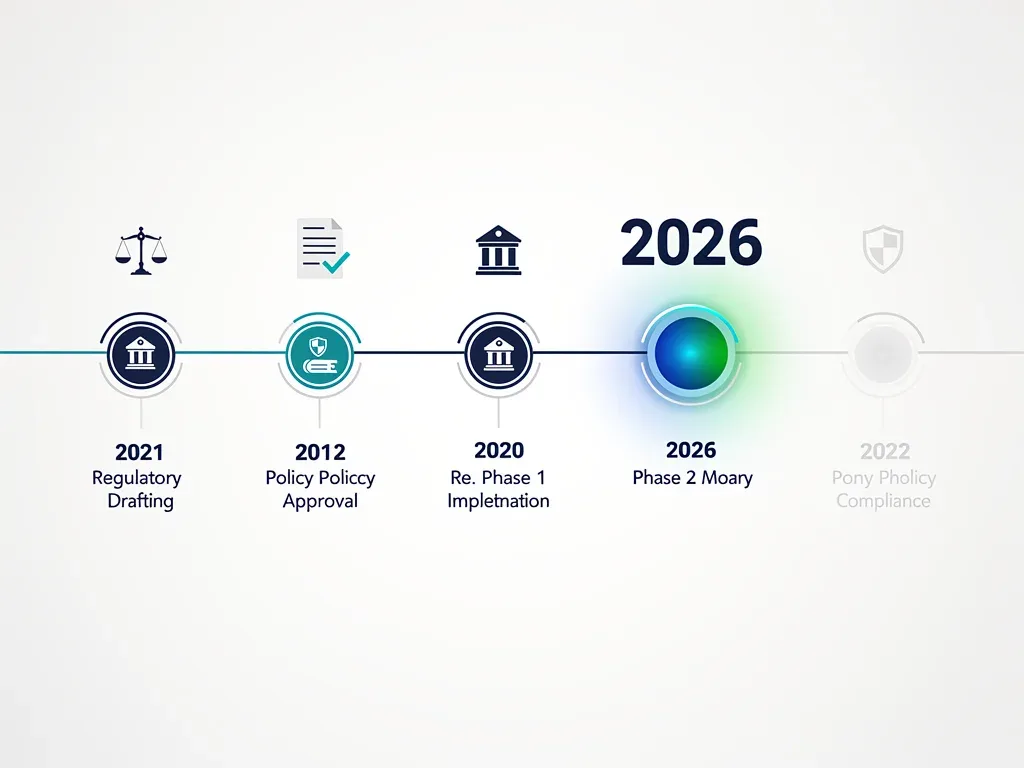
Timeline of Actions for Individuals
Start by reviewing 2025 FICA wages from the employer that sponsors the plan. Wages above the $150,000 threshold may trigger Roth treatment for applicable 2026 catch-up contributions.
Next, review the plan's catch-up provisions and determine whether the regular or special age-60-to-63 catch-up limit applies.
Finally, consider how the Roth requirement changes current taxes, take-home pay, and the balance between pre-tax and Roth retirement savings.
Potential Exemptions and Exceptions
The Roth catch-up requirement does not apply identically to every type of retirement arrangement. The final regulations specifically exclude plans described under sections 408(k) and 408(p) from this particular Roth catch-up wage rule.
Traditional and Roth IRAs also operate under separate contribution and catch-up rules rather than this employer-plan Roth catch-up mandate.
Understanding the account type is therefore essential before applying the SECURE 2.0 catch-up contributions rules to an individual's retirement savings.
IRA Catch-Up Contributions Are Separate
IRA catch-up contributions are governed by separate limits and eligibility rules. The mandatory employer-plan Roth catch-up requirement does not convert IRA catch-up contributions into the same system.
For 2026, the IRA contribution limit increased to $7,500, with a separate additional catch-up amount for eligible individuals age 50 or older.
Workers using both an IRA and an employer-sponsored plan should therefore track the limits and tax rules for each account separately.
The Role of Financial Advisors
SECURE 2.0 catch-up contributions can interact with tax planning, retirement income, investment allocation, and household cash flow.
A qualified professional can help an individual evaluate how mandatory Roth treatment fits alongside traditional retirement savings and other assets.
Professional advice can be especially useful for higher earners, couples coordinating retirement strategies, or workers approaching retirement with several account types.
Choosing the Right Advisor
When seeking advice, look for professionals with experience in retirement plans and federal tax rules rather than relying solely on generalized financial guidance.
An advisor should be able to explain how different contribution types affect current taxes, future distributions, and the participant's broader retirement plan.
Official IRS guidance and the participant's plan administrator should still be used to confirm the rules governing specific SECURE 2.0 catch-up contributions.
Long-Term Implications for Retirement Savings
The Roth catch-up mandate changes the tax composition of retirement savings for affected higher-wage workers by directing specified catch-up dollars into Roth treatment.
Over time, this can increase the proportion of after-tax retirement assets available to some participants while reducing the current tax deduction associated with those catch-up dollars.
The ultimate financial impact depends on individual circumstances, including tax rates, years until retirement, withdrawals, and other sources of income.
Adapting to a Shifting Landscape
Retirement rules and annual contribution limits continue to evolve through legislation, regulations, and inflation adjustments.
Workers should periodically review contribution elections instead of assuming that strategies established several years earlier remain optimal or compliant.
Employers also need ongoing administrative updates so that SECURE 2.0 catch-up contributions are implemented consistently with current IRS guidance.
Key Point | Brief Description |
|---|---|
Mandate Year | The Roth catch-up requirement applies beginning in 2026 for affected participants. |
2026 Wage Threshold | Prior-year FICA wages above $150,000 from the plan-sponsoring employer can trigger the Roth catch-up requirement. |
Regular Catch-Up Limit | Eligible participants age 50 or older generally have an $8,000 catch-up limit in covered plans for 2026. |
Ages 60–63 | The enhanced 2026 catch-up limit is $11,250 for eligible participants in this age range. |
Employer Impact | Payroll and plan systems need to identify affected workers and properly administer Roth catch-up contributions. |
Frequently Asked Questions About SECURE 2.0 Catch-Up Contributions
What changed for catch-up contributions in 2026?▼
Certain eligible participants whose 2025 FICA wages from the plan-sponsoring employer exceeded $150,000 generally must make applicable 2026 catch-up contributions as designated Roth contributions.
Is the income threshold still $145,000?▼
No. The original statutory amount was $145,000, but the inflation-adjusted threshold used for determining the 2026 requirement is $150,000.
What is the regular 2026 catch-up contribution limit?▼
The regular catch-up limit for eligible participants age 50 or older in 401(k), 403(b), most governmental 457 plans, and the TSP is $8,000 for 2026.
What is the catch-up limit for people ages 60 through 63?▼
Eligible participants who attain age 60, 61, 62, or 63 during 2026 can have a higher catch-up limit of $11,250 in covered non-SIMPLE plans.
Are IRAs subject to this Roth catch-up wage mandate?▼
No. IRAs have separate contribution rules, and this particular employer-plan Roth catch-up wage requirement does not apply to IRA catch-up contributions.
What Happens Now
The 2026 rules make SECURE 2.0 catch-up contributions particularly important for workers age 50 or older whose prior-year wages place them above the Roth threshold.
Affected individuals should review contribution elections, plan documents, and tax implications, while employers need systems capable of administering the Roth requirement correctly.
Annual thresholds and contribution limits can change with inflation, so participants should continue checking current IRS guidance and their plan administrator rather than relying on older dollar amounts.